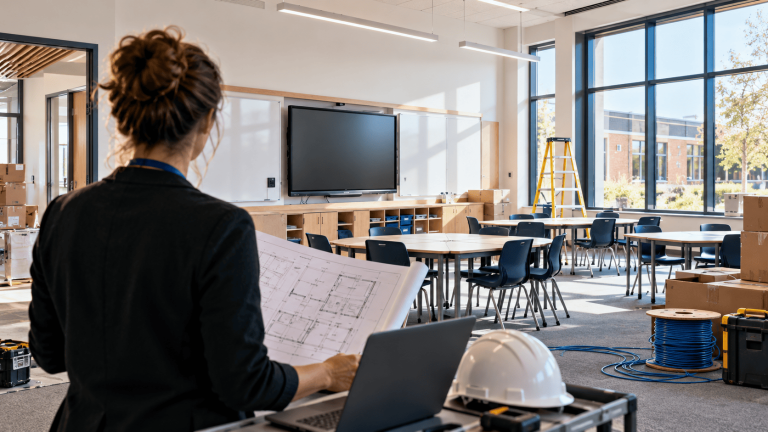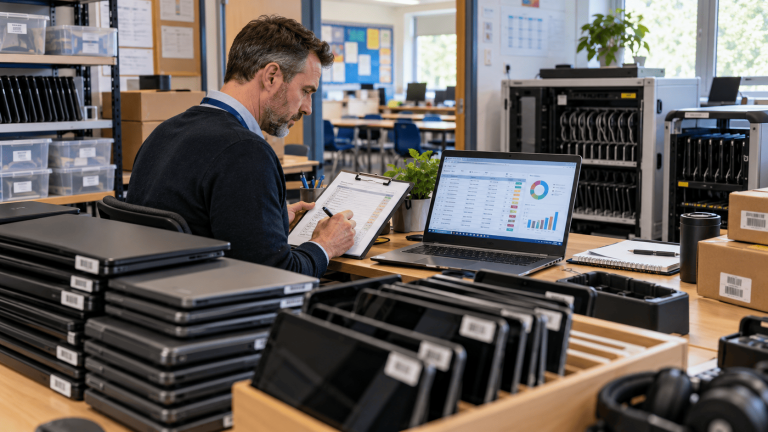

The school had support. What it didn’t have was enough time, enough flexibility or enough value from it. For years, the formula seemed simple. If you want good IT support, you need engineers onsite. The more days onsite, the better the service. At least that’s what many schools believed.
But as technology changed, that assumption became increasingly difficult to justify.
The busiest person wasn’t fixing the problems
When we first started reviewing support models with schools, a common pattern emerged. Engineers were spending valuable time travelling between sites, dealing with issues that could have been resolved remotely in minutes. Meanwhile, schools were paying for presence rather than outcomes.
The question wasn’t whether support was being delivered. It was whether the model still made sense.
Rethinking what support looks like
One secondary school had become heavily dependent on onsite support over time. Like many schools, the arrangement had evolved rather than been designed. As systems grew and requirements changed, so did the support contract. When we reviewed the environment, we identified an opportunity to do things differently.
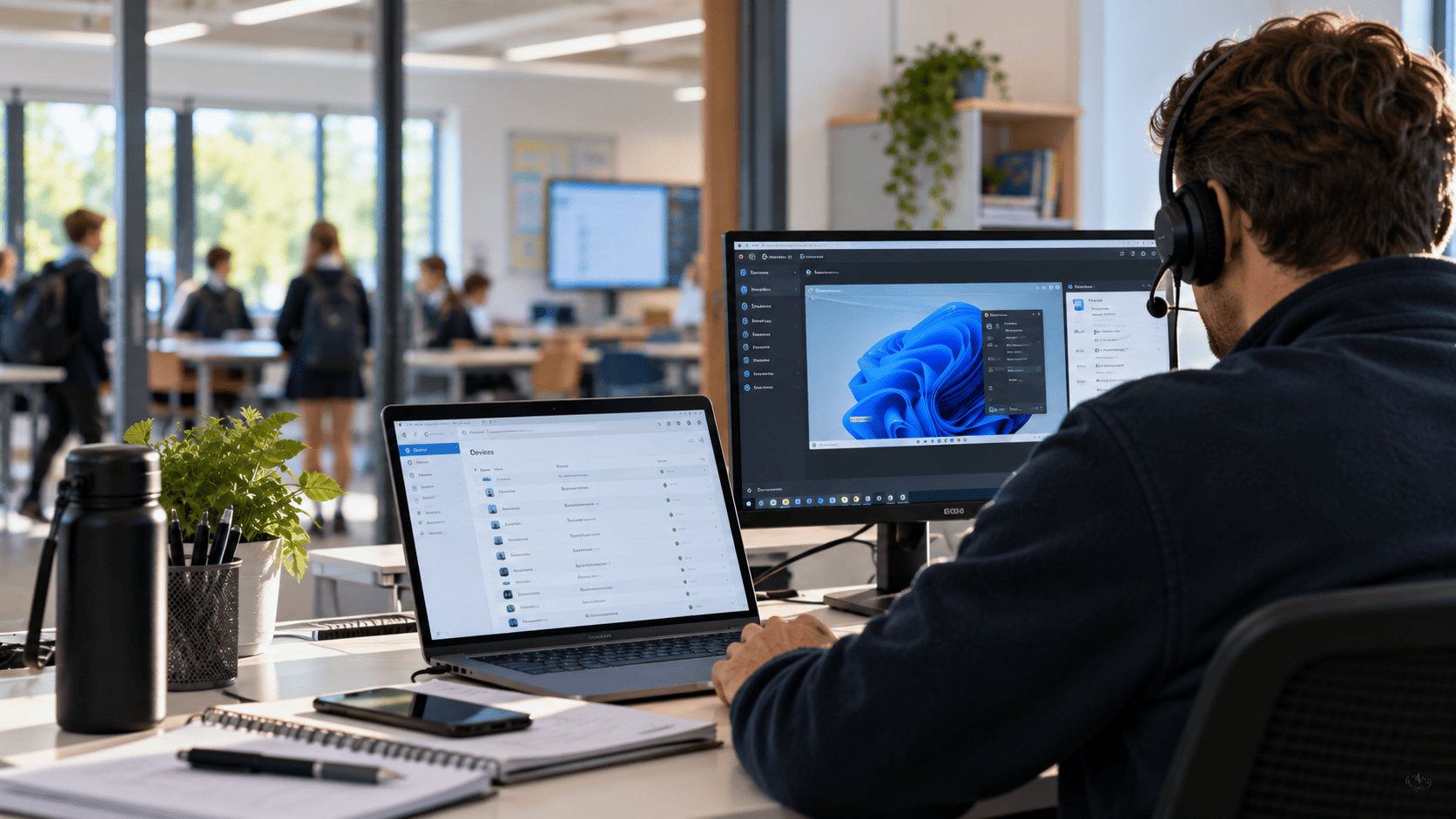
Alongside a wider move to Microsoft 365 and a cloud-first environment, the school transitioned to a remote-first support model. The result wasn’t less support. It was faster access to the right expertise, reduced reliance on physical visits, and a more efficient use of support resources.
The cloud changed the equation
Historically, onsite support was often essential because key systems lived inside the server room. If something went wrong, somebody had to be there. Cloud platforms changed that.
With identities, applications, devices and data managed centrally, many issues can now be diagnosed and resolved without waiting for an engineer to arrive on site. For schools, that means more issues resolved quickly and less time lost waiting for support.
Paying for outcomes, not attendance
The most successful support models are not measured by how often an engineer visits. They’re measured by what gets resolved. Schools want reliable systems, responsive support and access to expertise when they need it. They don’t necessarily need someone sat in a building to achieve that. In many cases, shifting to a remote-first model allows schools to access a broader team of specialists while making better use of their support budget.
A better question
When schools and trusts review their support arrangements, they often ask: “How many days onsite do we need?”. A better question might be: “What outcomes are we trying to achieve?”
This answer may lead to a very different support model. One that is more responsive, scalable and better aligned to the way modern school technology actually works.
Is your support model still fit for purpose?
If your contract was designed around servers, desktop PCs and on-premise systems, it may be time for a review. We help schools assess whether their current support model is delivering value, and whether a remote-first approach could provide faster resolution times, greater flexibility and better use of budget.
Sometimes the biggest improvement isn’t adding more support. It’s redesigning how support is delivered.